Pregnancy Trimester & Milestone Calculator
Understanding Your Pregnancy Trimesters & Key Milestones
A full-term pregnancy is traditionally divided into three distinct phases known as trimesters. Each trimester spans approximately 12 to 14 weeks and brings unique developmental stages for the growing baby as well as specific physical shifts for the expectant mother.
Breakdown of the Three Trimesters
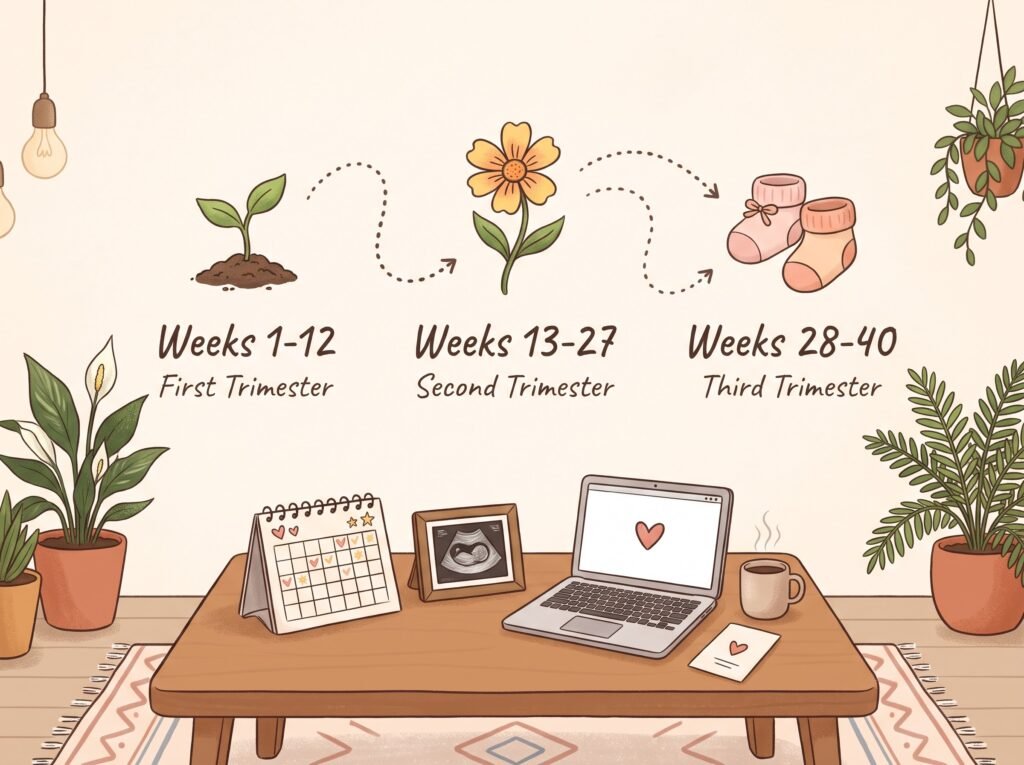
First Trimester (Weeks 1 – 12): This stage begins on the first day of your last menstrual period. Key milestones include fertilization, organ formation, and hearing the baby’s heartbeat for the first time via ultrasound.
Second Trimester (Weeks 13 – 27): Often called the “golden phase,” energy levels typically return, and early symptoms like morning sickness ease. Important milestones include determining baby gender and feeling first movements (quickening).
Third Trimester (Weeks 28 – 40+): The final stage focuses on rapid fetal growth, lung maturation, and preparing the body for labor and birth.
Tracking your pregnancy week by week using an accurate trimester calculator helps ensure you never miss critical medical checkups, prenatal tests, and milestone dates.
Important Pregnancy Milestones by Week
Pregnancy milestones help you understand the major stages of your baby’s development. Although every pregnancy is different, the following timeline provides a general overview of what may happen during each stage.
- Weeks 4–5: Early pregnancy development begins, and pregnancy tests can often detect the hormone hCG.
- Weeks 6–8: Early structures continue developing, and cardiac activity may be visible during an ultrasound.
- Weeks 9–12: Major organs continue developing, and the embryo is now referred to as a fetus.
- Weeks 13–16: The second trimester begins, and the baby’s movements become more coordinated.
- Weeks 18–22: An anatomy ultrasound is commonly performed to examine the baby’s development.
- Weeks 20–24: Many pregnant women begin noticing fetal movements, although timing varies.
- Weeks 24–28: The baby continues growing, and gestational diabetes screening is commonly offered.
- Week 28: The third trimester begins.
- Weeks 37–40: The pregnancy approaches full term, and the body prepares for delivery.
These milestones are approximate and should not replace medical examinations or advice from your healthcare provider.
How Does a Pregnancy Trimester Calculator Work?
A pregnancy trimester calculator uses your pregnancy dates to estimate your current trimester, gestational age, and upcoming milestones.
Depending on the calculator, you may enter:
- The first day of your last menstrual period.
- Your estimated due date.
- Your pregnancy start date, if known.
The calculator uses this information to estimate how many weeks and days pregnant you are and identify which trimester you are currently in.
The results are estimates. An ultrasound and your healthcare provider’s assessment may provide more accurate pregnancy dating.
What Is Gestational Age?
Gestational age describes how far along a pregnancy is, measured in weeks and days.
It is usually calculated from the first day of the last menstrual period, rather than the actual date of conception.
For example, someone who is 20 weeks pregnant has a gestational age of 20 weeks, even though conception typically occurred around 18 weeks earlier in a regular 28-day cycle.
Healthcare professionals use gestational age to monitor pregnancy progress and determine the timing of prenatal appointments and screenings.
Important Prenatal Appointments and Tests
Prenatal care helps monitor the health of both the mother and baby throughout pregnancy. Some common appointments and screenings include:
- Early pregnancy visits: Confirming pregnancy dating and reviewing medical history.
- First-trimester screening: Depending on individual circumstances, screening may assess the risk of certain chromosomal conditions.
- Anatomy ultrasound: Usually offered around 18–22 weeks to examine the baby’s development.
- Gestational diabetes screening: Commonly performed between 24 and 28 weeks.
- Third-trimester appointments: Monitoring fetal growth, maternal health, and preparation for delivery.
The exact schedule varies depending on your health, pregnancy history, and local medical recommendations.
Why Is Tracking Pregnancy Milestones Important?
Tracking pregnancy milestones can help you:
- Understand your baby’s general developmental stages.
- Prepare for upcoming prenatal appointments.
- Keep track of important screening dates.
- Follow your pregnancy progress week by week.
- Prepare for the next trimester and delivery.
A pregnancy calculator is a helpful planning tool, but it cannot assess your baby’s health or replace professional prenatal care.
Frequently Asked Questions
How many weeks are in each pregnancy trimester?
The first trimester generally covers weeks 1–12, the second trimester covers weeks 13–27, and the third trimester begins at week 28 and continues until delivery.
When does the third trimester begin?
The third trimester begins at 28 weeks of pregnancy.
When can I find out my baby’s sex?
An ultrasound may identify the baby’s sex during the second trimester, often around the anatomy scan at 18–22 weeks. Accuracy depends on the baby’s position and other factors. Some prenatal blood tests may provide this information earlier.
When do most pregnant women feel their baby’s first movements?
Many people first notice fetal movement between 16 and 24 weeks. In a first pregnancy, movement may not be noticed until after 20 weeks.
Can a pregnancy calculator predict exact milestone dates?
No. A calculator provides estimates based on pregnancy dates. Actual developmental timing varies, and medical assessments are needed to evaluate pregnancy progress.
Medical Disclaimer
This Pregnancy Trimester & Milestone Calculator provides general educational estimates only. It does not diagnose medical conditions or assess fetal health. Pregnancy development and milestone timing vary between individuals. Always consult a qualified healthcare professional for prenatal care and personalized medical advice.